AI Changed the Way I Think About Software Engineering
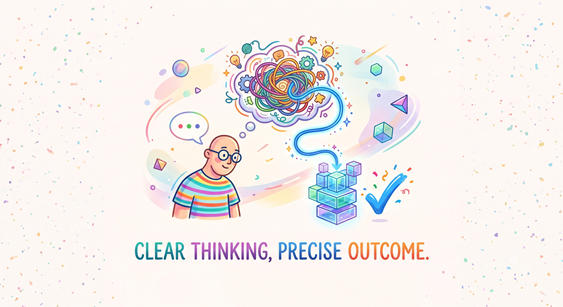
When AI tools first started becoming popular, I treated them like every other new technology that had appeared during my career. Software development has always evolved through better tools. We moved from writing everything ourselves to using frameworks, cloud platforms, package managers, and increasingly powerful development environments. Each step made us more productive, but it didn't fundamentally change what it meant to be a software engineer. I assumed AI would simply be the next tool in that long line of improvements.
What surprised me was that the biggest impact wasn't on how quickly I could write code. The bigger change happened in how I approached problems. Looking back, I think that's why so many discussions about AI miss the point. Most conversations focus on code generation, productivity gains, or whether developers will eventually be replaced. Those topics are interesting, but they aren't what changed my day-to-day work the most. The real change was much more subtle. AI forced me to pay attention to how I think.
Early on, I used AI for the obvious tasks. I asked it to generate functions, explain unfamiliar concepts, and write unit tests. Sometimes the results were excellent and saved me a lot of time. Other times the answers were disappointing. My initial reaction was to blame the tool. I assumed the model wasn't smart enough or that the technology still had a long way to go. After repeating this cycle enough times, however, I started noticing a pattern. The quality of the answers often reflected the quality of the questions I was asking.
When I approached a problem with a clear understanding of the requirements, AI usually produced something useful. When my understanding was incomplete, the output became inconsistent. If I wasn't sure what I wanted, AI wasn't sure either. What I eventually realized was that AI acts less like a search engine and more like a mirror. It reflects the clarity—or lack of clarity—in your own thinking. That realization changed how I worked. Instead of spending all my energy learning how to write better prompts, I became more interested in defining problems more precisely.
This shift affected more than just the way I interact with AI. It changed how I approach software engineering in general. Earlier in my career, I often focused heavily on implementation details. I enjoyed discussing frameworks, patterns, architectures, and technical solutions. Those things still matter, but I've come to appreciate that they are usually downstream from a more important question: are we solving the right problem in the first place? AI has a way of exposing weak assumptions very quickly. If the problem statement is vague, the generated solution is vague. If the requirements are contradictory, the solution becomes contradictory as well. The faster the implementation becomes, the more important problem definition becomes.
I've also noticed that this lesson extends beyond software development. When I use AI to help organize ideas, write content, or plan projects, the same pattern appears. Clear thinking produces better outcomes. Ambiguous thinking produces mediocre ones. In a strange way, AI has encouraged me to slow down. Rather than jumping directly into execution, I spend more time making sure I understand what success actually looks like. That extra thinking often saves far more time than any generated code.
This is why I don't believe the most important skill for the next generation of engineers will be learning a specific AI tool. New models will appear, interfaces will change, and today's popular tools will eventually be replaced by something better. The more durable skill is learning how to think clearly, communicate effectively, and break complex problems into understandable pieces. Those abilities have always been valuable, but AI makes their importance much harder to ignore.
Dan Harmon's Story Circle describes transformation as a journey. A person begins in a familiar world, encounters something new, struggles to adapt, learns an important lesson, and returns with a different perspective. That structure resonates with my experience of AI. I started by seeing it as another productivity tool. Over time, I discovered that the most valuable lesson had very little to do with productivity at all. The technology wasn't teaching me how to write code faster. It was teaching me how much better results become when I spend more time understanding the problem.
I still enjoy writing software. I still care about architecture, clean code, and good engineering practices. None of those things have become less important. What has changed is my appreciation for the work that happens before the first line of code is written. AI has made me realize that software engineering is often less about producing code and more about understanding people, problems, constraints, and trade-offs. The code is still necessary, but it is no longer the most interesting part of the process.
If AI has changed anything for me, it hasn't been my ability to build software. It has been my perspective on what building software actually means.